
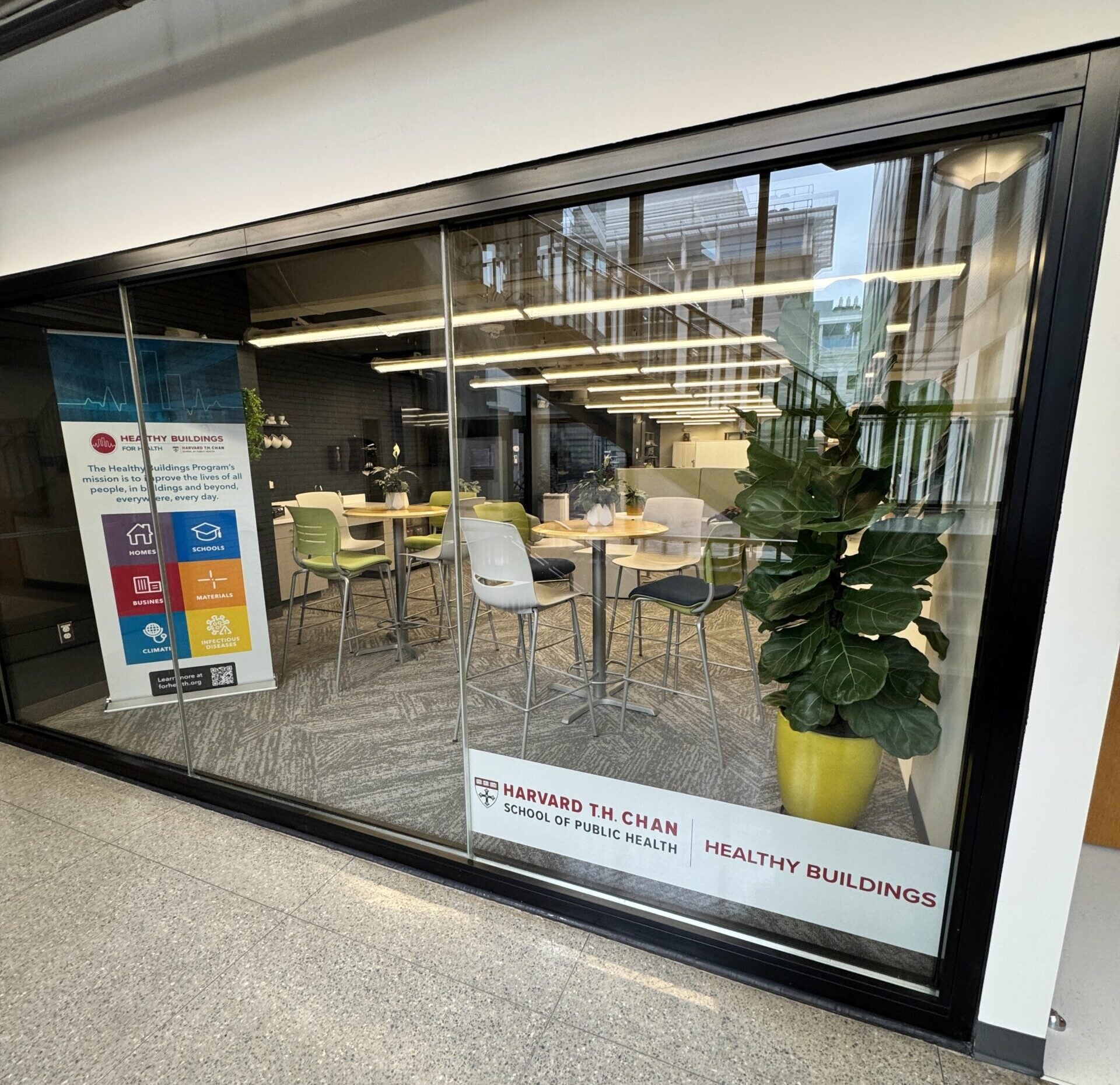
On April 2, 2026, the members of the Department of Environmental Health (EH) gathered to celebrate a major milestone: our move from the Landmark Center to dedicated space in the Harvard T.H. Chan School of Public Health (HSPH) buildings. We marked the occasion with the “Under One Roof” celebration and tour. It was a special event to thank everyone who tackled the many logistical, design, and coordination challenges that come with such a big move.
Here is the story of how we said goodbye to an old home, built a new one, and celebrated both our space and our people, Under One Roof.
Saying Goodbye to Landmark
In November 2025, the members of the EH department held one final gathering at the Landmark Center to bid the space farewell before the lease ended. It was a nostalgic moment: colleagues, students, and staff came together in the building that had hosted more than 20 years of research, teaching, and community.
Even in the midst of these memories, there was a strong sense of excitement. We knew we were closing one chapter in order to open another: moving into a new, purpose-designed space in the HSPH buildings that would bring the Healthy Buildings Program and the broader EH community closer together, both physically and intellectually.
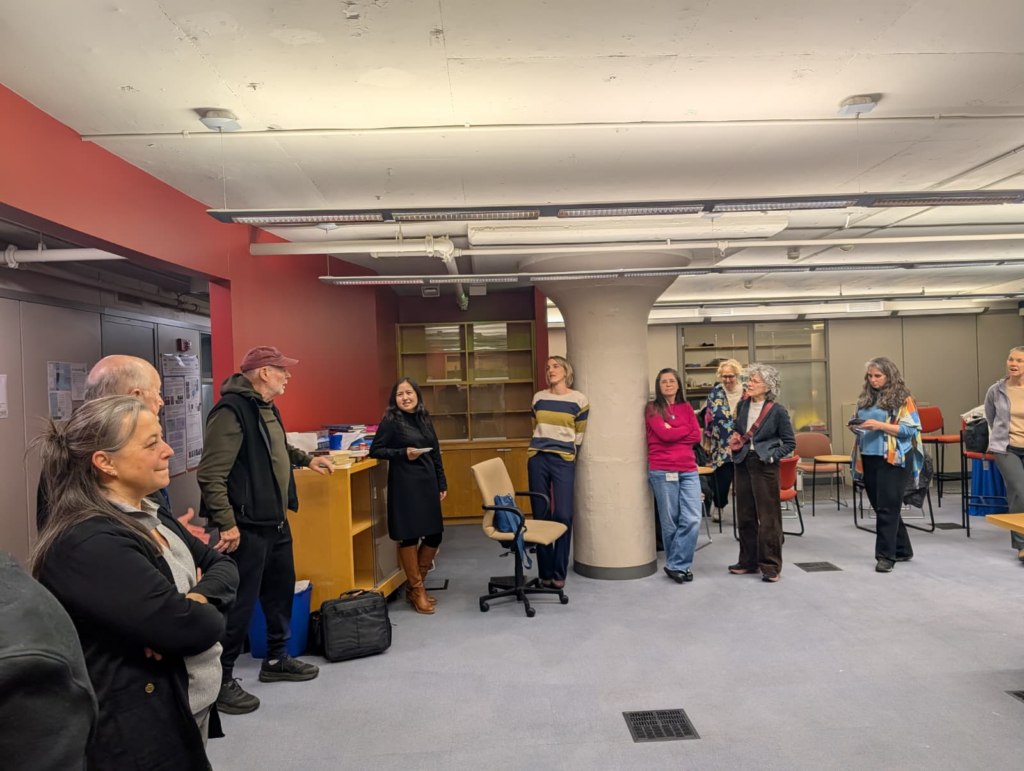
Photo Credit: Parham Azimi
New Space in the HSPH Buildings
Our new space, Room G33 in Building 1 of the HSPH complex, was technically ready for move-in shortly after the New Year in 2026. However, as anyone who has ever moved a lab or office knows, “ready” on paper is not the same as “fully functional and furnished.” It took several more months of planning, coordination, ordering, assembling, and fine-tuning before the space became the welcoming and efficient home it is today.
The move required a huge amount of time, effort, and collaboration. Many people contributed behind the scenes—far more than we can list here. We owe particular thanks to our colleague, Jose Vallarino, who was instrumental in coordinating countless details and making sure the needs of our team were met throughout the process. We are also deeply grateful to HSPH staff members Bobby McDermott, Sally Bedugnis, Chuck Labins, and Danny Beaudoin for their extraordinary support and hands-on help in bringing this space to life.
The outcome is both beautiful and functional. The original idea for the space began as a vision from our program director, Dr. Joseph Allen, who imagined a home for the Healthy Buildings Program that would embody the very principles we teach and study. This vision was translated into reality through professional architectural services and then refined through the interior design work of Zahra Keshavarz and Kristen Pfiser, who did an outstanding job in creating a space that is warm, modern, and purpose-driven.
The space consists of:
- A large open area
- Three small offices
- One conference room for team meetings of up to 10 people
The large open-concept area is thoughtfully divided into three distinct sections:
- Common Area
A welcoming space for students and team members to gather, connect, and take a break. Beverage and coffee stations make it easy to recharge between meetings and classes, and the layout encourages informal conversations and collaboration. - Classroom Area
A flexible teaching and presentation space where Dr. Allen now teaches his High Performance Buildings course. The classroom can also be used for thesis defenses, guest lectures, and small seminars, allowing our research and teaching activities to happen directly within the Healthy Buildings Program’s home base. - Lab/Work Area
A lab-style section with dedicated desks and workstations for Healthy Buildings Program members. This area is designed for focused work, data analysis, project meetings, and day-to-day research activities—supporting both individual productivity and team collaboration.
The following photos show just how extensive the transformation has been.
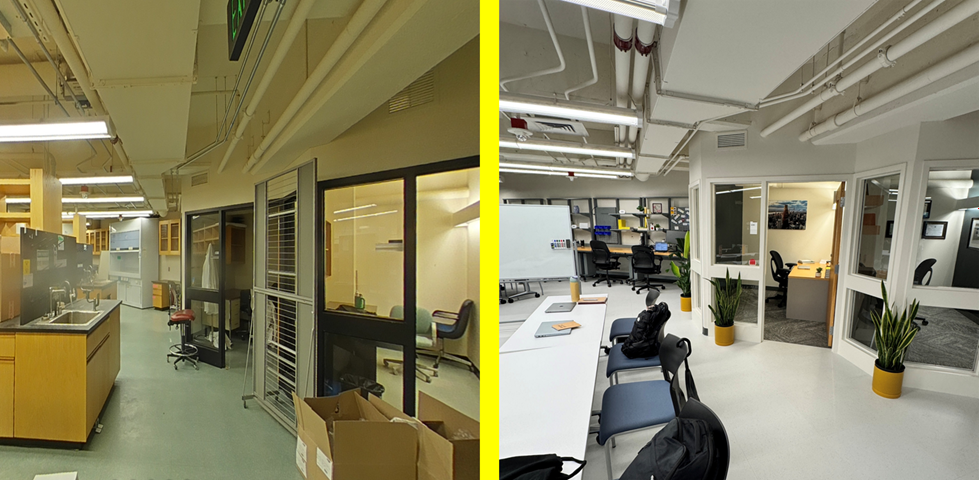
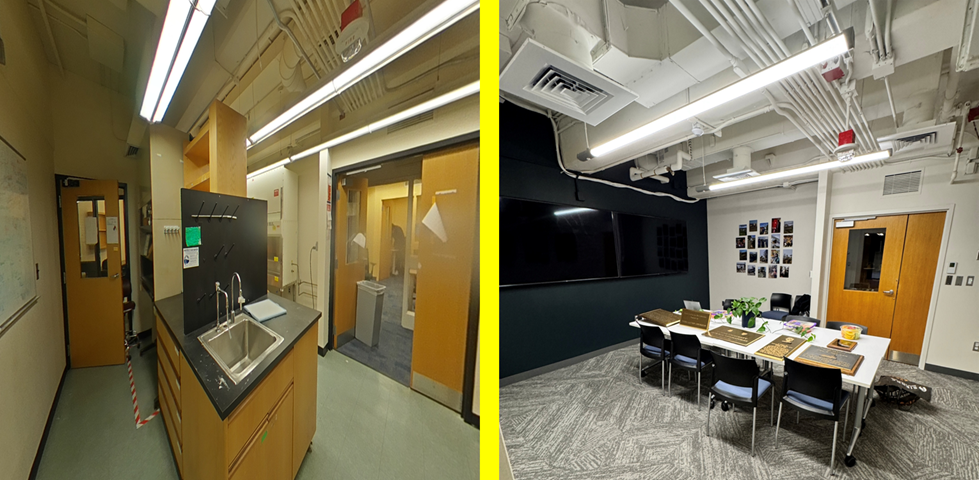
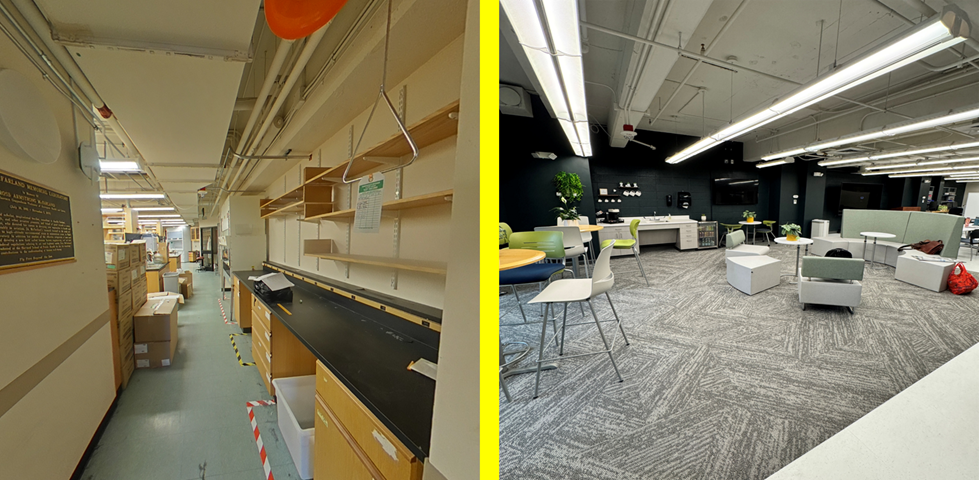
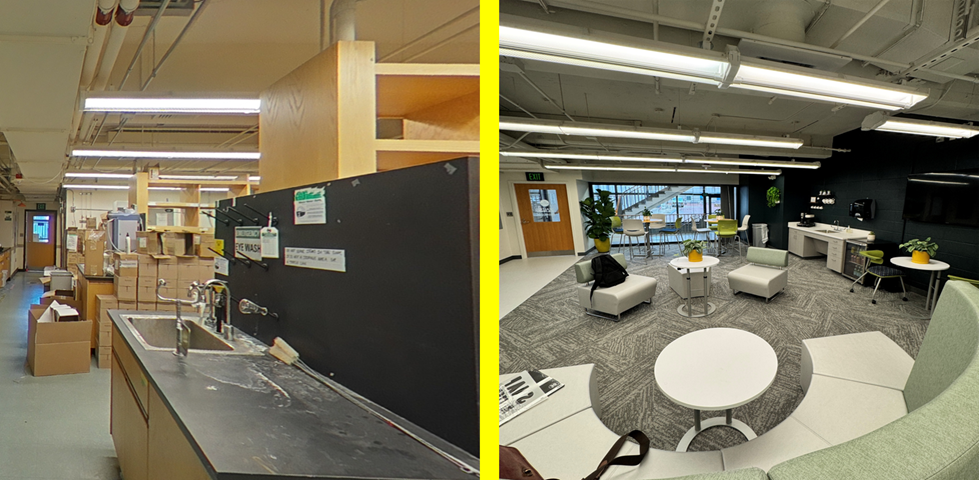
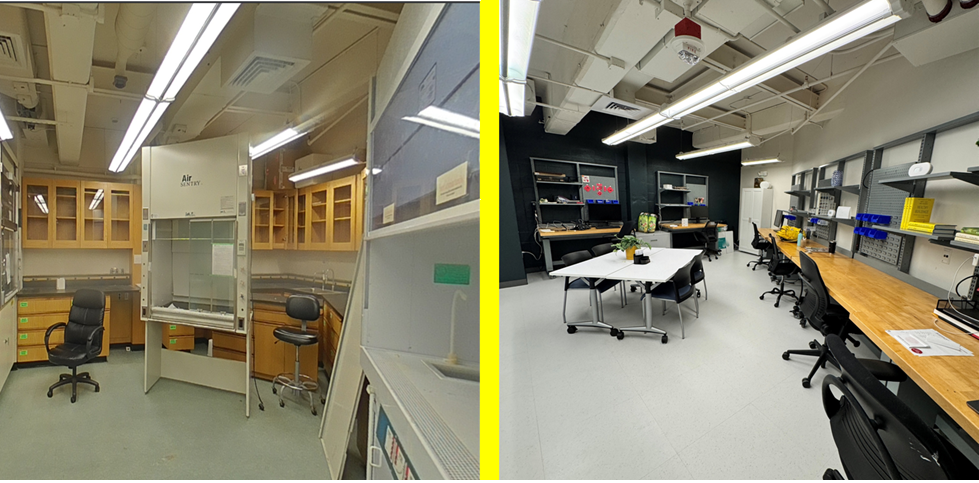
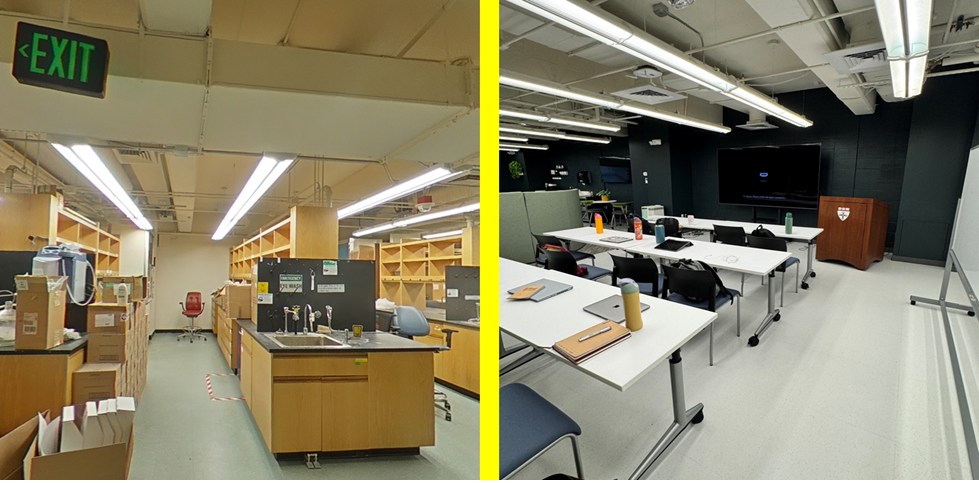
Photos Credit: Chuck Labins & Zahra Keshavarz
A Healthy Home for the Healthy Buildings Program
From the beginning, we set out to ensure that our new home at HSPH would not only be visually appealing and efficient, but also a living example of healthy, sustainable building design. We applied our Healthy Buildings principles to the project, from ventilation and materials to daylight and energy use.
- Indoor Air Quality and Ventilation
The central forced-air system serving the space provides 100% outdoor air, filtered with MERV 15 air filters to remove fine particles and other contaminants. The system is also equipped with CO₂ demand-control ventilation, which modulates airflow based on occupancy and carbon dioxide levels. During classes (often with more than 20 people in the room) the system delivers over 7 air changes per hour (ACH) of fresh air. This high ventilation rate helps keep indoor CO₂ concentrations below 600 ppm, even at peak occupancy, supporting better cognitive function, comfort, and overall well-being. - Healthy and Sustainable Materials
We also took care to minimize the environmental footprint of the renovation. Wherever possible, we reused healthy furniture from the Landmark Center, particularly pieces that we had previously vetted for safer materials at the time of purchase. For both new and reused items, we prioritized products that are free from “forever chemicals” (PFAS)—not only those on well-known lists such as PFOA and PFOS but also broader chemical families that are increasingly recognized as problematic—and that meet high standards for low emissions and healthier material content, aligning with best practices in the field of healthy buildings. This approach allowed us to extend the life of existing high-quality furniture, reduce waste, and avoid unnecessary new manufacturing, while still ensuring that the materials in our space support health. - Daylight and Movement
To bring more natural light into the space, we opened the front wall and replaced it with a large glass window. This new glass wall looks out onto a bright stairwell and fills the room with daylight. It also makes the stairs more visible and inviting, which gently encourages people to use the stairs instead of the elevator and stay more active during the day. - Doing More with Less
All of this (high-performance ventilation, healthy materials, creative reuse, and thoughtful design) was achieved with a budget of approximately half of the initial renovation cost estimate. The project demonstrates that it is possible to deliver a space that is healthy, sustainable, and beautiful while remaining attentive to economic realities. In other words, our new home is not only good for people and the planet, but also fiscally responsible.
Recognition from the Department
We were honored that our efforts were recognized during the Under One Roof celebration. As part of the event, judges from the department visited each participating space and evaluated them in three categories:
- Most Scientific
- Most Eco-Friendly
- Most Creative
Our main space in G33 received the award for “Most Eco-Friendly”, acknowledging the careful attention to ventilation, materials, energy-conscious design, and reuse. In addition, the workspace of our colleague Zahra Keshavarz was awarded the prize for “Most Scientific”. Zahra’s desk area showcased her research projects with representative figures and visual summaries, effectively turning a personal workspace into a mini-exhibit of ongoing scientific work and impact.
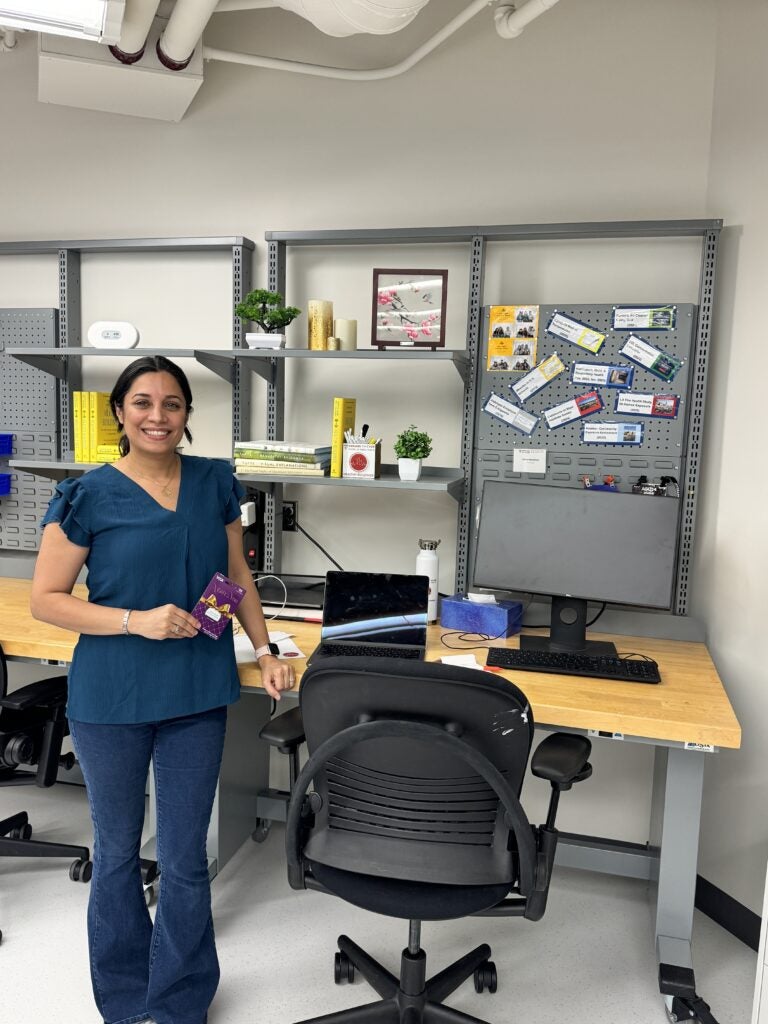
Photo Credit: Parham Azimi
Celebrating Leadership and Legacy
This celebration was about more than just a new office. It also coincided with a major professional milestone: 15 years of Dr. Joseph Allen’s service as a faculty member in the Department of Environmental Health.
Over the past decade and a half, Dr. Allen, as the director of Healthy Buildings Program, he has advanced research on how the built environment influences health, productivity, and sustainability. Under his leadership, the Healthy Buildings Program has grown into a vibrant, interdisciplinary hub that brings together students, researchers, practitioners, and policymakers.
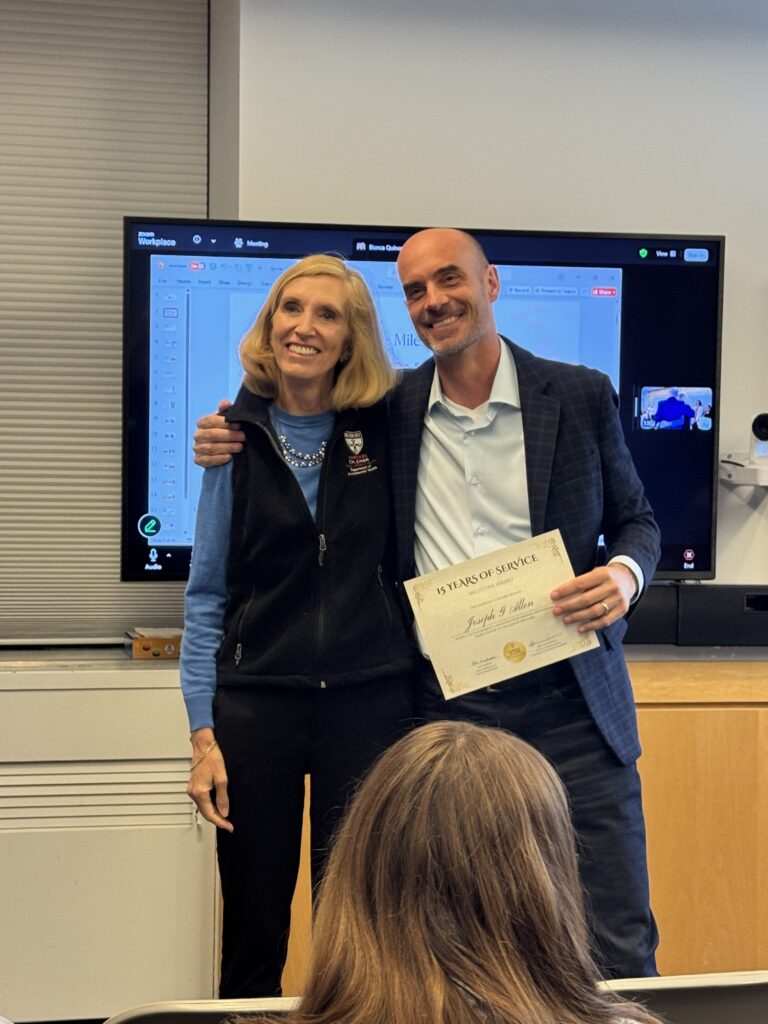
Photo Credit: Zahra Keshavarz
In short, on April 2, 2026, we celebrated two milestones “under one roof“: a new home for the Healthy Buildings Program, and 15 years of visionary leadership from our director, Dr. Joseph Allen.
As we look ahead, we are excited to continue our work—teaching, learning, and discovering—in a space that truly reflects who we are and what we stand for.